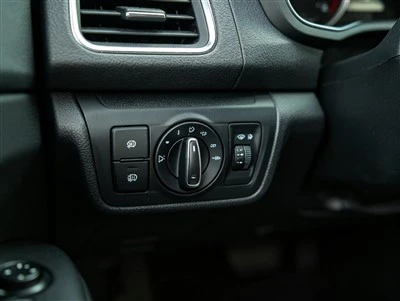
When engineers design a human-machine interface (HMI) - whether for a medical device, an industrial control panel, a car steering wheel, or a remote control - one of the most consequential component choices is the metal dome switch. Though tiny in size, these stamped stainless steel discs determine the "feel" of every button, the reliability of every press, and the overall perceived quality of the end product. This guide breaks down how to select, specify, and integrate metal dome switches with confidence.
" />
What Is a Metal Dome Switch?
A metal dome switch (also called a snap dome or tactile dome) is a precision-stamped disc of spring steel or stainless steel that is concave on one side. When pressed with sufficient force, it rapidly inverts - producing a crisp tactile "click" and an audible sound - and simultaneously bridges two contact pads on a PCB below, completing an electrical circuit. When the force is released, the dome snaps back to its original shape.
This simple mechanism is the gold standard for tactile feedback in keyboards, keypads, and membrane switch panels because it combines four properties that no other switch technology matches: low profile (as thin as 0.1 mm after assembly), long life (1 million+ actuations), consistent tactile feel, and extremely low cost at volume. For a deeper comparison, see our guide on metal dome vs. silicone carbon pill switches.
The Key Specifications Engineers Must Define
When sourcing snap dome switches, four parameters drive nearly all design decisions:
1. Actuation force. Measured in Newtons (N) or grams-force (gf), this is the peak force required to snap the dome. Common ranges are 100 gf (light, for consumer remotes) to 600 gf (heavy, for industrial controls). Force tolerance is typically ±15% on standard domes; tighter tolerances (±10%) are available from precision manufacturers like Shanyo.
2. Dome diameter and shape. Round domes from 4 mm to 20 mm cover most applications. Triangular domes offer stable seating and are common in automotive interiors. Square domes are used where PCB land patterns are square. Cross-type and four-legged domes provide additional stability under vibration.
3. Travel and tactile ratio. The dome travel (how far it deflects) is typically 0.1–0.3 mm. The tactile ratio - the difference between peak force and contact force divided by peak force - determines how "crisp" the click feels. A 50% tactile ratio is considered excellent; below 30% feels mushy. Our metal dome selection guide covers this in detail.
4. Plating material. Bare stainless steel works for dry, indoor environments. For corrosion resistance and lower contact resistance, gold or nickel plating is applied to the underside. Gold is preferred for low-level signal circuits (medical, audio) and outdoor applications; nickel offers a cost-effective middle ground.
Single Domes vs. Dome Arrays
Designers can choose individual loose domes or pre-assembled dome sheet arrays:
| Factor | Loose Domes | Dome Sheet Arrays |
|---|---|---|
| Assembly method | Manual or automated pick-and-place | Peel-and-stick film placement |
| Alignment accuracy | Operator-dependent | Precision die-cut to ±0.1 mm |
| ESD risk | Higher (handling individual parts) | Low (film-protected) |
| Cost at volume | Lower per part, higher labor | Slightly higher per part, lower labor |
| Best for | Prototypes, low-volume products | Production volumes >5,000 units |

Common Design Mistakes - and How to Avoid Them
Mistake 1: PCB cutout too large. The dome must sit on a flat annular contact ring. If the PCB via or cutout beneath the dome is larger than the dome's support ring, the dome will sit below the board surface, feel mushy, and may fatigue prematurely. As a rule of thumb, the PCB cutout diameter should be 60–70% of the dome diameter.
Mistake 2: Overlooking spacer height. When a silicone keypad or polyester overlay sits above the dome, a spacer (typically 0.1–0.3 mm) is needed to prevent preloading. Preload reduces tactile feel and shortens dome life. Designers should calculate the total stack-up: dome height + spacer + overlay + keycap tolerance.
Mistake 3: Ignoring contamination. Dust, oil, or flux residue on the contact pads under the dome causes intermittent contact. Dome arrays address this by covering the PCB with a PET film - but the film must be properly vented to allow the dome to snap through. For high-reliability applications, consider die-cut foam gaskets that seal the switch area.
Mistake 4: Specifying actuation force without considering the keycap. A 300 gf dome feels light under a large finger-sized keycap but heavy under a tiny 4 mm key. The transfer ratio of the keycap (pivot point, lever arm) changes the effective force the user experiences. Always validate with physical prototypes.

Materials and Manufacturing: What Behind the Dome
The most common material for metal domes is SUS301 stainless steel, which offers the right balance of spring temper, fatigue resistance, and formability. Higher-performance applications may use SUS304 or beryllium copper. At Shanyo, incoming coil stock is tested for hardness (typically HV 420–480), thickness, and surface finish before stamping.
Domes are formed in high-speed progressive dies at rates of up to several hundred strokes per minute. The critical quality parameters are:
- Dome height consistency (influences tactile feel and travel)
- Edge burr height (must be <0.01 mm to avoid PCB damage)
- Force-displacement curve shape (must show a sharp, clean snap)
- Contact flatness on the underside (ensures reliable electrical contact)
After stamping, domes are deburred, cleaned, and (if specified) plated. The final 100% test step uses automated tactile force analyzers that measure every dome's snap force, contact force, and travel - rejecting out-of-spec units before packaging.
Industry-Specific Selection Guidance
Medical devices. Look for domes with gold plating, tight force tolerance (±10%), and materials certified to biocompatibility standards. Shanyo's medical-grade dome arrays are assembled in cleanroom conditions.
Automotive. IATF 16949 certified production, 4-legged or triangular dome geometries, and plating that survives −40°C to +85°C thermal cycling. See our automotive metal dome applications overview.
Consumer electronics. Cost-optimized round domes in pre-cut arrays with PET adhesive backing. Typical applications include TV remotes, game controller buttons, and smart home controls.
Industrial controls. Higher force domes (400–600 gf), corrosion-resistant plating, and sealed construction to resist dust and moisture.
Partnering with a Dome Manufacturer
Selecting a metal dome supplier is not just about unit price - it is about engineering partnership. A capable manufacturer will provide:
- Free sample kits with multiple force and diameter options for tactile evaluation
- Custom die development for non-standard dome shapes
- PCB land pattern recommendations based on the selected dome
- Reliability test reports (life cycle, environmental, salt spray)
- Volume pricing with transparent tooling cost amortization
Shanyo has been manufacturing precision metal dome switches and dome arrays in Qingdao since 2004, serving medical, automotive, consumer electronics, and industrial OEMs across North America, Europe, and Asia. With in-house stamping, plating, and array assembly capabilities, the company controls the entire production chain - from SUS301 coil to final packaged dome array.
For engineering teams preparing the next generation of HMI designs, requesting a sample kit is the fastest way to validate tactile feel before committing to production. Visit Shanyo's contact page to request samples or discuss a custom dome application.
About Shanyo - Shanyo Precision Electronics (yo-shan.com) specializes in custom metal dome switches, dome sheet arrays, silicone keypads, flexible printed circuits (FPC), and die-cut components. With 22+ years of manufacturing experience, IATF 16949 and ISO 13485 certified facilities, and engineering support from prototype through mass production, Shanyo is a trusted tactile switch partner for product teams worldwide.
We support global OEM and ODM customized orders for metal domes, FPC circuits and membrane switches. For large-scale wholesale export orders, we formulate exclusive standardized packaging plans based on product characteristics and customer usage scenarios. Classified packing, independent accessory packaging and overall reinforcement ensure zero loss during long-distance delivery. Unified packaging standards also facilitate customers' subsequent inventory management and automated assembly. Scalable professional packaging systems stabilize the overall delivery quality of precision electronic component export business. Flexible packaging equipment portfolios adapt to varied packaging requirements of OEM electronic component suppliers.