A garden-equipment maker in the Netherlands came to us after a first summer outdoors. Their controller keypads used ordinary silicone buttons on patio heaters, misting timers and outdoor watering panels. By August the keys had turned yellow where the sun hit them, the skin around several key edges had cracked, and the printed legends on the most-used keys were fading to illegible marks. The housings and electronics were fine. The keypad compound had not been chosen for outdoor UV.
We reviewed the failed units with the customer. Ordinary silicone is compounded for indoor feel and cost, not for long exposure to ultraviolet light, ozone and temperature cycling. Over months in direct sun the polymer chain breaks down: surface chalking, yellowing, a duller feel and, in the worst case, cracking at the flexible key rims. We replaced the keypads with a UV-stabilized silicone grade matched to the controller's exposure, and kept the indoor handheld remote on the standard compound to hold cost down.
This release covers the three silicone keypad grades we supply for outdoor equipment: standard silicone, UV-resistant silicone and weatherproof (UV plus ozone and thermal-cycle resistant) silicone. It compares them on aging, yellowing, cracking, feel and cost, and maps each grade to the garden, patio and leisure equipment where it belongs. The keypads can be built over metal domes, a dome sheet array or plain carbon pill contact, depending on the feedback the panel needs.
Why ordinary silicone ages outdoors
Silicone rubber gives a soft key feel, good sealing and a long compression life indoors. Its weakness under sun exposure is the polymer backbone and the additives that set the color. Ultraviolet photons break molecular bonds at the surface, ozone attacks the exposed polymer, and daily heating and cooling cycle the key between expansion and contraction. A standard grade compounded for indoor keypads shows this as yellowing, chalky texture, loss of gloss and eventually surface cracks at the thin, flexible key edges where stress concentrates.
The grade that resists this is formulated with UV stabilizers, light-screening fillers and a color system chosen for outdoor retention. It costs more per keypad than standard silicone, but it keeps the color, gloss and seal through outdoor seasons. The point of the comparison below is to match the grade to how much sun and weather the actual panel sees, rather than buying the most expensive compound for every key.

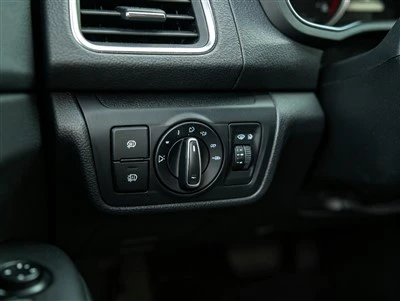
An outdoor controller keypad: the silicone compound must hold color and seal through sun, ozone and temperature cycling, not just the indoor press cycle.
Comparison: standard vs UV-resistant vs weatherproof silicone keypads
| Parameter | Standard silicone | UV-resistant silicone | Weatherproof silicone |
|---|---|---|---|
| UV exposure | Low, indoor or sheltered | Moderate to high direct sun | Continuous outdoor exposure |
| Yellowing / fade | Prone in sun | Stabilized against yellowing | Best color and gloss retention |
| Cracking risk | Higher at key rims | Lower | Lowest over thermal cycles |
| Ozone / weather | Not rated | Basic ozone hold | Ozone and thermal-cycle rated |
| Key feel | Softest, widest color range | Soft, near-standard feel | Slightly firmer in some grades |
| Relative cost | Lowest | Moderate | Highest |
| Best fit | Indoor handhelds, sheltered panels | Seasonal outdoor equipment | Permanent outdoor, washdown or harsh climate |

Inside the keypad: the silicone top sits over the dome or carbon pill. The compound choice protects the surface; the contact below sets the feedback.
How each grade behaves outdoors
Standard silicone is the softest and least expensive keypad compound. It carries the widest color range and gives the familiar rubbery key feel used on indoor remote controls, handheld units and sheltered machine panels. Its outdoor limit is exposure: in direct sun it yellows, chalks and loses gloss, and the thin key rims can crack after repeated thermal cycling. It belongs where the keypad stays indoors or under a covered, shaded enclosure.
UV-resistant silicone adds light stabilizers and a color system screened against ultraviolet aging. It keeps its color and gloss through seasonal direct sun and feels close to standard silicone, at a moderate per-keypad premium. This grade suits equipment that spends part of the year outside: seasonal patio controllers, garden timers, handheld pool and leisure units, and panels mounted under a roofline but still reached by afternoon sun.
Weatherproof silicone goes further than UV resistance. It is formulated against ozone, continuous outdoor weather and daily temperature swings, and it keeps its seal and surface through washdown and damp conditions. It is the most expensive grade and in some blends feels slightly firmer than standard silicone. It suits permanent outdoor installations: exposed garden and irrigation panels, exterior wall-mounted controllers, coastal or high-humidity equipment, and any keypad washed with disinfectant or hose spray.
Matching the grade to garden and leisure equipment
Indoor handheld remotes, covered tool panels, garage and shed controls - standard silicone. Where the keypad does not see direct sun, the standard compound gives the soft feel and lowest cost without the outdoor stabilizer premium.
Seasonal outdoor timers, patio heater controls, misting panels, handheld leisure units - UV-resistant silicone. Where the equipment sits outside during the warm season and is stored or covered in winter, the UV grade holds color through the sun months without the full weatherproof premium.
Permanent exposed controllers, irrigation and lighting panels, coastal or damp outdoor units - weatherproof silicone. Where the keypad stays outside year-round and may take spray, humidity or ozone, the weatherproof compound protects the surface and seal across all four seasons.
Colored and dark keys need a color-specific check. Light colors and white keys show yellowing first; dark and gray keys hide it better but may fade or chalk. Before locking a color, we run the chosen compound and color through a sample so the customer sees the aging direction rather than assuming a shade will hold.
Feel, sealing and the contact under the key
The compound sets the surface and aging; the contact below sets the feedback. Over a metal dome or dome array the key snaps back with a clear tactile click. Over a plain carbon pill the feel is softer and quieter, common on sealed low-cost keypads. The silicone top can carry raised symbols, printed legends or a dual-shot color layer, and the whole keypad can be sealed to an IP rating where water and dust must not reach the circuit. For an outdoor panel, the keypad seal and the keypad compound are specified together; a weatherproof compound on an unsealed keypad still leaks.
Selection checklist for outdoor silicone keypads
1. Daily sun exposure the panel actually gets. Full midday sun pushes toward UV-resistant or weatherproof. A shaded, covered position can stay on standard silicone. Read the mounting location, not just the product category.
2. Seasons outside. Seasonal equipment stored in winter needs less aging resistance than a panel fixed outdoors all year. Match the grade to the months and the climate.
3. Humidity, spray and washdown. Damp, coastal or hose-spray conditions call for the weatherproof grade and a sealed keypad build. Dry sheltered use does not.
4. Color and legend retention. Light and white keys show yellowing early; ask for the stabilizer system behind the chosen color. Printed legends and dual-shot layers age differently, and the method is chosen with the compound.
5. Feedback and contact. Decide whether the key needs a metal dome snap, a dome array click or a soft carbon-pill press. The compound grade does not set this; the contact below does.
6. Seal rating. For outdoor use the keypad must seal to the required IP level against water and dust. Specify the seal together with the compound rather than treating them as separate afterthoughts.
Common mistakes buyers make
The first mistake is putting standard silicone on a permanently outdoor panel to save cost. The Netherlands project failed this way: the compound was never rated for sun, and the keys yellowed and cracked within one season.
The second mistake is buying weatherproof silicone for an indoor remote. The premium compound adds cost and sometimes a slightly firmer feel with no aging benefit where there is no sun to resist.
The third mistake is assuming color alone protects against yellowing. A dark color hides the aging but does not stop the polymer from breaking down; the stabilizer system inside the compound is what matters.
The fourth mistake is specifying the keypad compound but leaving the seal out. A weatherproof top skin over an unsealed edge still admits moisture, and the contact underneath corrodes.
The fifth mistake is skipping an outdoor sample. Feel, gloss and color read differently on a bench than after months outside. A sample in the chosen compound and color lets the customer check the starting look before production.
What Shanyo supplies and tests
At Shanyo we build custom silicone keypads in standard, UV-resistant and weatherproof compounds, built over metal domes, dome arrays or carbon pill contact to the feedback the panel needs. Keypads can be sealed to the required IP rating, with printed or dual-shot legends and the key layout molded to the drawing. We provide engineering samples within 48 hours of the drawing freeze, and production builds for wholesale and OEM buyers worldwide.
Shanyo manufactures silicone buttons, membrane switches, dome arrays and FPC tails from our Qingdao factory. Send us the mounting location, sun and weather exposure, the seasons outside, the color, the feedback you need and the seal rating, and our engineering team will recommend the silicone grade and quote factory pricing. Contact Shanyo for an outdoor keypad sample.
How outdoor aging actually progresses
Outdoor keypad failure rarely starts at the contact. It starts at the surface. Ultraviolet light reaches the exposed silicone and breaks bonds in the polymer network; the surface turns chalky and loses gloss first. Ozone in the air attacks the exposed polymer chains where the skin is thinnest, usually the key rim and the sidewall that flexes every press. Daily heating and cooling expand and contract the key, and the thin rims repeat that flex until fine cracks appear along the edges. In wet conditions, moisture that reaches the compound weakens the surface further and can reach the contact below.
Stabilizers in the outdoor grades intercept the UV energy before it breaks the backbone, light-screening fillers reduce what reaches the polymer, and the color system is chosen to resist light fade rather than just match a shade on the day of molding. These additives change the compound recipe, the curing profile and the color matching, which is why outdoor grades are not interchangeable with standard silicone by simply swapping the color.
Colors, legends and dual-shot molding
Legends on an outdoor keypad wear on two fronts: the silicone ages, and the printed mark abrades under finger contact. Screen-printed legends sit on the surface and fade with wear; dual-shot molding molds a second color into the key so the symbol is part of the rubber and does not wash off. For high-use outdoor keys, dual-shot or laser-marked legends hold longer than a printed layer, and the choice is made together with the compound grade. White and light keys show yellowing earliest, so for those keys the stabilizer system is checked specifically rather than assumed from a dark sample.
Key feel in outdoor grades sits close to standard silicone. The added fillers can make a weatherproof blend slightly firmer, and the actuation force and travel are set through the dome or pill below rather than the compound. If a panel needs a soft press, that feedback is engineered into the contact and the key geometry, not traded away for the outdoor grade.
Automotive, outdoor leisure, industrial and consumer use
In garden and patio equipment, controllers for heaters, watering, lighting and misting sit on decks, walls and posts where afternoon sun reaches them. Seasonal units can use the UV-resistant grade; permanently mounted irrigation and lighting panels use the weatherproof grade. In outdoor leisure products, pool and spa controls, patio and barbecue panels and handheld leisure remotes balance sun exposure against cost, usually on the UV-resistant grade unless the unit lives outside full time. In agricultural and horticultural equipment, exposed cab and station panels see dust, spray and temperature swing, where the sealed weatherproof build carries the panel. In consumer outdoor accessories, small seasonal gadgets keep the standard or UV-resistant grade and a lighter cost target.
Checking the outdoor grade before production
Before a keypad goes to production, we mold a sample in the selected compound and color, check the key feel over the chosen contact, and review the seal against the required IP rating. The sample confirms the starting color and gloss, the legend method and the actuation force, and the same compound lot specification is carried into production so shipped keypads match the sample. For outdoor programs we also record the compound grade, color system and seal rating on the part drawing, so a later reorder does not drift to an indoor compound by mistake.
- John Smith, Senior Application Engineer, Shanyo Precision Electronics, Qingdao