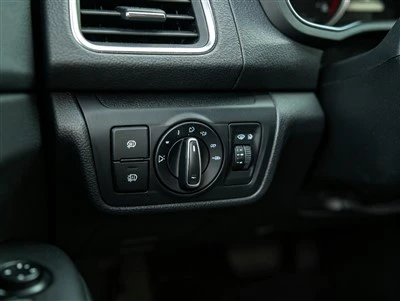
A European industrial equipment builder came to us with a pushbutton panel that operators kept missing. The panel was mounted on a packaging line, and the operators wore thick work gloves. The customer had specified standard metal domes with a 0.25mm stroke, the same part used on consumer remote controls. The operator pressed through the glove, the dome did not travel far enough to click, and the press registered as a light touch. Half the presses on the start button failed to register, and the line stopped every few hours.
We swapped the domes to a long-travel version with a 0.4mm stroke. The extra travel gives the operator a clear, longer click through the glove, and the press registers every time. The missed-press rate dropped to zero on the first trial. That project is the subject of this release. When you specify domes for a gloved industrial panel, the stroke matters as much as the actuation force, and a consumer-grade dome will underperform.
This release compares standard-stroke and long-travel domes on stroke, force, feedback and glove operation, and maps each to the operator condition it suits.
Why stroke matters more than you think
A standard metal dome has a stroke of about 0.25mm. The dome snaps from its convex rest position to a concave closed position, and the operator feels a brief click. On a consumer remote operated by a bare finger, that 0.25mm travel is enough. On an industrial panel operated by a thick work glove, the glove absorbs the short travel, the operator does not feel the click, and they press again or move on.
A long-travel dome extends the stroke to 0.4mm. The dome still snaps, but the travel is longer, the click is deeper, and the glove transmits the movement to the operator's finger. The operator knows the press registered without looking at the panel. This is the difference between a start button that works and one that needs a second press.

Long-travel domes give operators a deeper click through gloves, on industrial panels where every press must register.
Standard-stroke vs long-travel dome: comparison table
| Parameter | Standard dome | Long-travel dome |
|---|---|---|
| Stroke | 0.25mm | 0.4mm |
| Actuation force | 180-250 g | 250-320 g |
| Tactile feedback | Short click | Deep, long click |
| Glove operation | Misses press | Clear click through glove |
| Life cycles | 1 million | 0.5 million |
| Relative cost | Lower | Slightly higher |
| Best fit | Bare-finger consumer | Gloved industrial panel |
How the long-travel dome is built
The long-travel dome is a four-legged stainless steel dome with a deeper dishing than the standard part. The deeper dish gives the longer stroke, and the legs are tuned to keep the snap ratio consistent across the travel. The actuation force runs 250 to 320 grams, which is the range an operator can press through a glove without strain. The dome is typically supplied on a dome sheet array aligned to the PCB pads, or integrated into a membrane switch overlay for the panel.

The long-travel four-legged dome has a deeper dish and a longer stroke than the consumer-grade standard dome.
Which dome for which operator condition
Bare-finger consumer electronics, remote controls - standard. A TV remote, a home appliance fascia or a handheld controller operated by a bare finger uses a standard-stroke dome. The 0.25mm travel is enough feedback, and the lower cost and longer life fit consumer volumes. This is the rare case where standard is the right answer.
Gloved industrial panels, machinery controls, glove operation - long-travel. A packaging line panel, a forklift controller or an outdoor machinery remote where the operator wears work gloves needs the long-travel dome. The 0.4mm stroke transmits a clear click through the glove, and the press registers. This is the construction that fixed our European packaging-line customer's missed-press problem.
High-force gloved operation, safety-critical buttons - long-travel high-force. An emergency stop, a heavy machinery button or a safety interlock operated by thick winter gloves uses the long-travel dome at 280 to 320 grams. The higher force prevents accidental presses, and the long stroke confirms the operator meant to press.
Selection checklist
1. Glove condition. If the operator wears gloves, long-travel. If bare fingers, standard. This single question rules out one option.
2. Required life cycles. A consumer remote expects a million presses. An industrial panel sees far fewer presses per day, so the long-travel dome's half-million life is ample. Specify the dome by the expected daily press count, not a generic life number.
3. Actuation force range. Gloved operators need 250 to 320 grams. Bare fingers prefer 180 to 250 grams. Specify the force to the glove, not to a sample press.
4. Panel thickness. A long-travel dome needs a spacer layer that supports the deeper travel. Check the stack-up with the overlay and spacer before locking the dome height.
5. Feed method. Long-travel domes are supplied on a dome sheet array or as loose domes for SMT. For gloved industrial panels, the aligned dome sheet array avoids misalignment under the overlay.
Common selection mistakes
The first mistake is specifying a consumer-grade standard dome for an industrial gloved panel. The packaging-line customer's missed presses started exactly this way. The short 0.25mm travel disappears into the glove, and the press does not register. For a gloved panel, the long-travel dome.
The second mistake is choosing a higher-force standard dome thinking it will feel better. A higher-force standard dome still has the short stroke; the operator presses harder but still gets no deep click. The stroke, not just the force, must be specified.
The third mistake is ignoring the spacer stack-up. A long-travel dome needs more clearance under the overlay. If the overlay sits too close, the dome bottoms out before it snaps. Check the stack-up with the spacer layer.
The fourth mistake is specifying a long-travel dome for a bare-finger consumer product. The deeper travel feels mushy to a bare finger, and the half-million life is wasted. Match the dome to the operator.
What we supply and test
At Shanyo we produce standard-stroke and long-travel metal domes in four-legged and round shapes, from 180 to 320 grams actuation force, on dome sheet arrays or loose. Long-travel domes are tested for stroke, force and life on a force-displacement rig, and the test report ships with the order. Prototype domes ship within 48 hours from a drawing.
Shanyo manufactures custom OEM and wholesale metal domes and dome sheet arrays for industrial, medical, automotive and consumer electronics, with IATF 16949 quality systems covering automotive programs. Send us your glove condition, daily press count and required force, and our engineering team will recommend the standard or long-travel dome and quote factory pricing. Contact Shanyo for a sample long-travel dome and a glove-operation trial on your panel.
Cost trade-off, stated plainly
A standard-stroke dome is the lower-cost part because it is the high-volume consumer shape. A long-travel dome adds a small per-piece increase because the dish is deeper and the legs are tuned to a wider travel. On a twelve-button industrial panel, the gap between standard and long-travel is a fraction of the finished panel cost.
The mistake buyers make is reading that gap on the quote and specifying standard domes everywhere. The correct comparison is the cost of a missed start press: a packaging line that stops every few hours because operators miss the button loses production time, and the maintenance team gets called out. One avoided stoppage pays for the long-travel domes on hundreds of panels. For a bare-finger consumer remote, the standard dome is the right economic choice.
There is also a life-cycle trade-off. A standard dome runs to a million presses, a long-travel dome to half a million. On a consumer remote pressed a few times a day, the million-cycle dome outlasts the product. On an industrial panel pressed a few dozen times a day, the half-million-cycle dome still runs for years. Specify the dome by the expected press count, not by chasing a longer life number you will never use.
What we ask for before recommending a dome
To recommend standard or long-travel, we need four inputs: whether the operator wears gloves, the daily press count, the required actuation force and the overlay spacer stack-up. With those four numbers we can rule out the wrong dome immediately. Missing the glove-condition input is the most common reason a first dome comes back with missed presses, because the buyer specified a consumer-grade dome for an industrial panel without telling us.
Life and field reliability
The long-travel dome does not feel like a standard dome; it feels deeper and more deliberate. For an operator wearing gloves, that depth is the feedback they need. For a bare-finger consumer, the deeper travel feels like a heavier button. Matching the dome to the operator is the whole point. A dome that the operator cannot feel is a dome that will be pressed twice, and a dome that feels mushy to a bare finger will be complained about in consumer reviews.
Dome sheet, spacer and overlay stack-up
Beyond the dome itself, the long-travel part must sit on a dome sheet array aligned to the PCB, with a spacer layer that provides the 0.4mm travel clearance, and an overlay on top that transmits the press. We supply the dome sheet, the spacer and the overlay as one matched stack, so the buyer does not have to tune the clearance between three suppliers. The dome sheet adhesive is chosen to survive the panel's operating temperature, and the spacer is punched to the dome footprint.
We also run a force-displacement curve on each production lot, measuring the actuation force, the snap ratio and the travel, so the buyer sees the 0.4mm stroke confirmed before shipment. The long-travel dome is not a standard catalog part; it is tuned to the panel's force and travel requirement, and the curve ships with the order.
Sample and trial
For buyers who need a feel before tooling, we ship a long-travel dome on a demo PCB so the customer can press it with the actual glove used on the line. The trial takes a day and avoids a wrong-dome return six months into production. The sample ships free for qualified industrial programs.
Where the long-travel dome is the wrong choice
To make the decision concrete: do not specify a long-travel dome on a bare-finger TV remote, where the deeper press feels heavy and the half-million life is wasted. Do not specify a standard dome on a gloved packaging-line panel, where the short travel disappears into the glove. Do not ignore the spacer clearance, where the dome bottoms out before it snaps. And do not specify a long-travel dome without a force-displacement curve, because the travel and the snap ratio must be tuned together. These four rules cover the majority of dome stroke mistakes we see returned from the field.
We also supply the long-travel dome integrated into a silicone button or a FPC dome module, depending on how the panel is built. For a silicone keypad over a PCB, the long-travel dome sits under the silicone and the deeper press transmits through the rubber. For an FPC module, the dome is aligned on the flex and the module plugs into the panel. Either way, the dome is matched to the operator's glove, not to a generic catalog part.
For a side-by-side feel, we ship a sample set: a standard-stroke dome and a long-travel dome on the same PCB, so the customer can press both with the actual glove and decide which travel registers the press. This sample set is the fastest way to avoid a wrong-stroke return six months into production.
We ship the sample set free of charge for qualified industrial programs with a defined panel design.
Send us your panel drawing and glove type, and we will recommend the standard or long-travel dome within one working day.
Prototype long-travel domes ship within 48 hours from your drawing.
We support volumes from prototype to mass production.
Wholesale and OEM orders welcome.
Buy direct from the factory.
- John Smith, Senior Application Engineer, Shanyo Precision Electronics, Qingdao