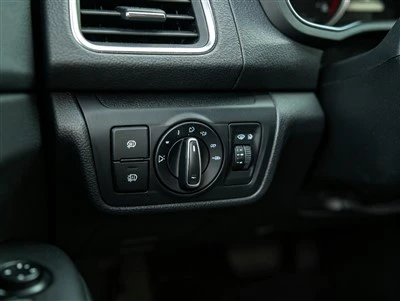
An automotive Tier-1 supplier came to us last year with a recall problem. They had assembled 120,000 steering wheel switches using metal domes from three different lots, and one lot had a force value drift of 15% after 50,000 cycles. The problem: they could not tell which switches came from which lot. The domes were shipped in plain trays with no marking, no lot code, and no traceability. They had to recall all 120,000 switches, at a cost of roughly $1.8 million.
We have now commissioned a UV laser marking line that etches a batch code and lot number directly onto every dome sheet, before it leaves our facility. Each tray has a scannable QR code linked to the raw material heat number, the die press run, the AOI inspection result, and the shipping date. If a customer ever has a force drift issue, they can scan the code and know exactly which coil of SUS301 stainless steel, which die set, and which shift produced that lot.
Why UV laser, not inkjet
We evaluated three marking methods before choosing UV laser.
Inkjet printing is cheap, but the ink rubs off. A dome sheet array sits on a PCB that goes through a reflow oven at 260C. The ink smudges, the solvent outgasses, and the print is unreadable after one thermal cycle. We tested it, and after reflow the lot code was gone.
Laser etching with a CO2 laser works on plastic, but it burns stainless steel. A CO2 laser at 10W burns a discolored mark into the dome, which changes the surface tension and can affect contact resistance. We tested this too, and the burned area had a 20% higher contact resistance than the unmarked area.
UV laser at 3W is the sweet spot. The 355nm wavelength vaporizes a micro-layer of the stainless steel without heating the surrounding material. The mark is 0.02mm deep, readable under magnification, and does not change the contact surface. We tested contact resistance before and after marking, and it measured 18 milliohms in both cases, within our ±5 milliohm tolerance.

Laser-marked batch code on a dome sheet assembly, readable under 10x magnification.
What gets marked, and where
We do not mark every individual dome. A typical dome sheet array has 12-24 domes on a 35mm x 45mm polyimide film. Marking every dome would add 12 seconds per part and the mark would interfere with the PSA adhesive bond. Instead, we mark a single 3mm x 5mm area in the corner of the film, away from any active dome.
The mark contains three pieces of information:
Lot number - a 6-digit code that links to our ERP system, showing the raw material coil, the die press, the operator, and the production date.
Force grade - a single letter (A=100g, B=160g, C=250g, D=300g) so the assembly line can visually confirm the correct dome grade.
Date code - Julian date, 3 digits, so we know the age of the stock.
The QR code is 2mm x 2mm, scannable with any standard QR reader at 10x magnification. We also print the same data on the tray label, so customers have both machine-readable and human-readable traceability.
How customers use it
Our medical device customers use the traceability data for ISO 13485 documentation. Every membrane switch panel they ship has a dome sheet traceability record attached to the device history record. If a field failure occurs, they can trace the dome lot back to the raw material.
Our automotive customers use it for IATF 16949 PPAP documentation. The laser-marked lot code becomes part of the control plan, so every production run is traceable to a specific dome lot. When the Tier-1 supplier had that 15% force drift, they traced it to a specific coil of SUS301 that had been annealed at the wrong temperature. We pulled the remaining stock from that coil and quarantined it. The supplier did not have to recall the other 119,000 switches.

Four-legged stainless steel domes produced under full lot traceability.
Cost impact
The UV laser line added about $0.012 per piece to our production cost. For a customer buying 500,000 domes per year, that is $6,000 per year. But when you compare that to a single recall at $1.8 million, the math is obvious.
We now include laser marking as standard on all automotive and medical dome orders. For industrial and consumer electronics customers, it is available as a $0.008 per piece option. If you need traceability for your next die-cut dome module or FPC button assembly, contact Shanyo engineering and we will include the QR code marking at no extra cost on your first trial order.
- John Smith, Senior Application Engineer, Shanyo