The global metal dome market is entering a period of accelerated growth, driven by expanding automotive electronics adoption, rising demand for wearable and immersive consumer devices, and the ongoing electrification of industrial equipment. This article examines the key trends shaping the metal dome industry in 2026 and beyond, and what these shifts mean for procurement teams and product designers.

Square four-leg metal domes - the growth of VR/AR controllers and game peripherals is driving demand for compact, high-tactile dome geometries.
Market Size and Growth Outlook
The global metal dome market was valued at approximately $1.2–1.5 billion in 2025, with industry analysts projecting a compound annual growth rate (CAGR) of 6–8% through 2030. This growth is outpacing the broader electronic components market, which grows at roughly 3–4% annually. Several structural factors are driving this acceleration.
Consumer electronics remains the largest end-use segment, accounting for roughly 45% of demand, followed by automotive (25%), industrial (15%), medical (8%), and other sectors (7%). However, the growth mix is shifting: consumer electronics growth is moderating as smartphone saturation persists, while automotive and medical are growing at 10–12% annually as vehicle content per unit increases and home healthcare adoption accelerates.
For metal dome manufacturers, this means a strategic pivot is underway - balancing stable consumer electronics volume against higher-margin automotive and medical programs. Suppliers with IATF 16949 and ISO 13485 certifications are positioned to capture disproportionate share of this growing demand.
Key Growth Driver: Automotive Electronics Content
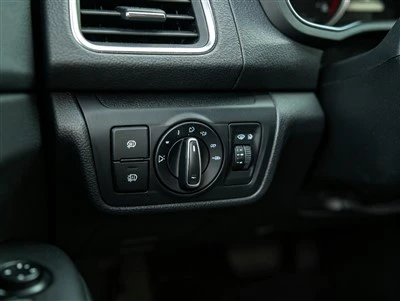
The single largest growth driver in the metal dome market is the increasing electronic content per vehicle. A modern mid-size vehicle contains 50–150 metal dome switches across the interior, up from 20–40 in a comparable vehicle a decade ago. This proliferation is driven by several trends:
- Steering wheel multifunction controls: Volume, track skip, voice recognition, cruise control, and driver assistance buttons now standard on all but the lowest trim levels - each using a dome sheet array integrated into the steering wheel.
- Center console touch surfaces with haptic feedback: As capacitive touch surfaces replace mechanical buttons, metal domes are often used beneath the surface to provide physical click feedback, combining sleek aesthetics with tactile operation.
- EV-specific controls: Regenerative braking adjustment, drive mode selection, charging port release, and climate control for battery thermal management add additional button positions in electric vehicles.
- Interior ambient lighting and personalization controls: New interfaces for seat massage, fragrance, mood lighting, and seat position memory are adding more dome-equipped buttons per vehicle.
Automotive-grade domes must meet stringent temperature (-40°C to +85°C interior, +125°C under-hood), vibration, and durability requirements, and require IATF 16949-certified production with PPAP documentation. This raises the barrier to entry and favors established, certified suppliers - a trend that benefits experienced China-based metal dome factories with automotive qualifications.
Emerging Application: VR/AR and Wearable Interfaces
The consumer virtual reality and augmented reality market is creating new demand for small, low-profile metal domes. VR controllers, AR glasses, and wearable input devices require buttons that are compact, lightweight, and provide crisp tactile feedback despite limited internal space.
Square four-leg and miniature round domes in the 3–5mm size range are particularly well-suited for these applications. Their low profile (0.15–0.25mm height) and light actuation force (100–200g) match the design constraints of slim, ergonomic wearable devices. Manufacturers serving this segment must offer tight force tolerances (±10g or ±5%) to ensure consistent feel across left/right controllers and across production units.

Long oval dome arrays for VR controller buttons - compact, low-profile arrays are in growing demand as wearable and immersive device markets expand.
Medical and Healthcare: High-Growth Niche
Medical device manufacturing is another fast-growing segment, driven by aging populations, home healthcare, and portable diagnostic equipment. Infusion pumps, patient monitors, glucose meters, blood pressure monitors, and portable ultrasound devices all rely on metal dome keypads for reliable, tactile input.
Medical applications impose unique requirements: biocompatible materials where applicable, cleanroom manufacturing, ISO 13485 quality systems, and often autoclave or chemical sterilization compatibility. Gold-plated domes on PI substrate arrays, rather than PET, are typically specified for medical applications due to their superior corrosion resistance and temperature stability during sterilization cycles.
Suppliers that have invested in medical-grade manufacturing capabilities report growing demand from medical device OEMs and contract manufacturers, with unit prices 30–50% above consumer-grade product margins. For buyers, this means early qualification of ISO 13485-certified medical-grade metal dome suppliers is increasingly important as product development timelines accelerate.
Supply Chain Trends: Regionalization and Quality Expectations
Post-pandemic supply chain dynamics continue to reshape the metal dome sourcing landscape. Three trends are particularly notable:
1. Dual-sourcing and regionalized supply. Many OEMs are moving from single-source Asia-only strategies to dual-source arrangements, with one supplier in China and a second in Southeast Asia, Mexico, or Eastern Europe. This reduces supply chain risk but also increases qualification overhead. Buyers should expect longer RFQ cycles and more rigorous audit requirements as suppliers build regional capacity.
2. Rising quality expectations. As metal domes proliferate in safety-critical applications (automotive, medical), buyers are demanding more than visual inspection. PPAP documentation, SPC process control data, life test reports, and full material traceability are becoming standard requirements, not exceptions. Suppliers that can provide this documentation automatically will win more programs.
3. Integrated component demand. Rather than purchasing individual domes and assembling them in-house, more buyers are requesting pre-assembled dome sheet arrays, often integrated with FPC flexible circuits or delivered as complete keypad modules. This reduces assembly cost and improves consistency, and favors suppliers with in-house FPC printing, die-cutting, and assembly capabilities.
Technology Trends: What to Watch in 2026–2027
- Thinner and smaller domes: As devices get slimmer, demand is growing for 0.04–0.05mm thick domes in 3–4mm diameters, with low actuation forces (80–150g) suitable for touchscreen-integrated physical buttons.
- Conductive carbon pills: Integration with silicone keypads increasingly uses carbon pills instead of bare metal contacts, reducing contact resistance and improving wear life. This is a growth area for silicone keypad manufacturers.
- Sealed and waterproof domes: For outdoor, medical, and industrial washdown applications, fully sealed dome arrays with silicone overmold are gaining traction, achieving IP67+ ingress protection without sacrificing tactile feel.
- Automated optical inspection (AOI): Leading suppliers are implementing 100% AOI on dome arrays, detecting missing domes, misalignment, and plating defects at production speed. This reduces incoming inspection burden for buyers and improves field reliability.
- Sustainability and RoHS compliance: REACH SVHC lists continue to expand, and customers are increasingly requesting PFAS-free and halogen-free options. Suppliers with proactive material substitution programs are better positioned for long-term partnerships.
What This Means for Buyers and Designers
For procurement teams and product designers, these market trends suggest several actionable recommendations:
- Start supplier qualification early. Automotive and medical qualifications take 3–6 months. If your program targets these segments, begin supplier evaluation before design freeze to avoid production delays.
- Specify integrated solutions. Where possible, request pre-assembled dome arrays or FPC-integrated solutions rather than individual domes. This reduces assembly labor and improves consistency, often at a lower total cost than in-house assembly.
- Build in quality requirements upfront. Include life test, environmental test, and contact resistance specifications in your RFQ, not as afterthoughts. Suppliers that can meet these requirements automatically are the ones most likely to perform in production.
- Consider total cost, not unit price. A 5% higher unit price from a qualified, certified supplier often saves far more in warranty claims, quality escapes, and engineering support costs than the initial savings from a cheaper but unqualified source.
As the metal dome market continues to evolve, suppliers that combine deep manufacturing expertise, rigorous quality systems, and broad application knowledge will be best positioned to support buyers navigating these changing requirements. Contact Shanyo to discuss your metal dome sourcing needs or request samples for evaluation.
Our precision metal dome switches and tactile dome arrays are exported to dozens of countries worldwide for consumer electronics, automotive and medical device applications. To protect these ultra-delicate components from static damage, dust contamination and extrusion during long-distance shipping, we adopt strict multi-layer export packaging standards. All tiny dome units are individually packed with anti-static shielding bags, while mass SMT batches adopt professional tape-and-reel packaging. Reinforced cartons with shockproof filling effectively avoid extrusion and collision during container transportation. Standardized and systematic industrial packaging workflows ensure every batch of precision electronic parts arrives intact for global clients. Optimized packaging equipment configurations help factories streamline export packing operations for high-volume electronic components.
Our precision metal dome switches and tactile dome arrays are exported to dozens of countries worldwide for consumer electronics, automotive and medical device applications. To protect these ultra-delicate components from static damage, dust contamination and extrusion during long-distance shipping, we adopt strict multi-layer export packaging standards. All tiny dome units are individually packed with anti-static shielding bags, while mass SMT batches adopt professional tape-and-reel packaging. Reinforced cartons with shockproof filling effectively avoid extrusion and collision during container transportation. Standardized and systematic industrial packaging workflows ensure every batch of precision electronic parts arrives intact for global clients. Optimized packaging equipment configurations help factories streamline export packing operations for high-volume electronic components.