A medical handheld device maker came to us with a field complaint from hospital nurses: the buttons on their vital-signs monitor felt mushy under latex gloves, and after eight months of hospital use, two keys had stopped registering reliably. The device used off-the-shelf mechanical tactile switches mounted on a PCB. The switches were rated for 500,000 actuations on a bench, but in hospital service the nurses wore gloves, pressed the keys off-center, and cleaned the device with alcohol wipes several times a shift. The switches wore out early, and the alcohol seeped into the switch seams. The buyer had assumed that a mechanical switch, being a known commodity, was the safest choice. It was not: it was the wrong input technology for a gloved, wiped, handheld medical device.
We redesigned the front panel with a silicone rubber keypad over a metal dome on the PCB. The silicone gave a clean tactile feel through a glove, the sealed keypad survived alcohol cleaning, and the dome's one-million-press life outlasted the device. That project is the subject of this guide. When you design the user interface of a product, the first decision is the input technology: silicone rubber keypad, membrane switch, or mechanical tactile switch. The three look similar from the outside but behave very differently on feel, life, sealing and cost.
This guide compares the three technologies on the parameters that matter in production, maps each to the application it fits, and lists the mistakes buyers make when they pick an input technology based on familiarity rather than the job it has to do.
How each technology works
Silicone rubber keypads are molded silicone buttons on a flexible silicone base. Under each button is a carbon or gold pill that, when pressed, closes contact pads on a PCB below. A metal dome can be embedded under the silicone to add a crisp tactile click. The silicone is sealed against the panel, so liquids and dust cannot reach the PCB. Silicone keypads are the standard for medical devices, remote controls, industrial remotes and automotive interior controls.
Membrane switches are layered polyester films printed with conductive circuits, separated by a spacer. Pressing the top film brings the two printed circuits together. They are thin, sealed and customizable, with legends printed directly on the top film. They are the standard for industrial control panels, appliance interfaces and outdoor equipment where a sealed, flat panel is required. They can include metal domes under the top film for tactile feedback.
Mechanical tactile switches are off-the-shelf electromechanical switches mounted on a PCB. They have a plunger that clicks when pressed, and they are actuated by a separate button cap or overlay. They are the cheapest and most familiar input, but they are not sealed: liquids can seep around the plunger, and they have a finite mechanical life. They suit consumer electronics, office equipment and low-cost products where sealing is not required.

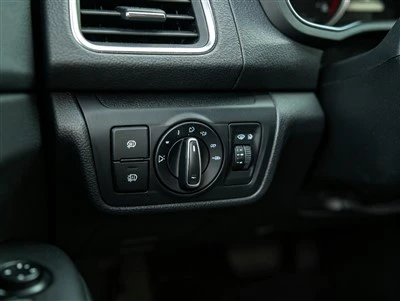
A sealed front panel; the input technology determines feel, sealing and life in the field.
Silicone keypad vs membrane switch vs mechanical switch: comparison table
| Parameter | Silicone rubber keypad | Membrane switch | Mechanical tactile switch |
|---|---|---|---|
| Tactile feel | Crisp, soft, customizable | Light, can add dome | Sharp click |
| Travel | 1.0-1.5mm | 0.3-1.0mm | 0.5-2.0mm |
| Actuation force | 100-300g, tunable | 100-300g | 160-300g fixed |
| Life | 1-5 million presses | 1-10 million presses | 100k-1 million presses |
| Sealing | IP67 when sealed | IP65-67 as built | IP40; not sealed |
| Gloved operation | Excellent | Good with dome | Poor; off-center presses miss |
| Cleaning / chemicals | Alcohol wipe rated | Alcohol wipe rated | Not rated; seepage risk |
| Legend durability | Laser etched, long life | Printed on film; can wear | On cap; can wear |
| Relative cost | Moderate; tooling needed | Moderate; screen printed | Lowest; off-the-shelf |
| Best fit | Medical, remote, industrial | Industrial panel, appliance | Consumer, office, low-cost |
Why the technology changes the product
The mechanical tactile switch is the cheapest and most familiar, which is why it appears in so many consumer products. It works well when the user is bare-fingered, the environment is dry, and the product life is short. The moment the user wears gloves, the panel must be wiped with alcohol, or the product must survive years in the field, the mechanical switch becomes a liability because it is not sealed and its life is finite.
The silicone rubber keypad trades a tooling cost for a sealed, comfortable interface. The molded silicone gives a soft, tactile press that works through a glove, and the sealed construction survives repeated alcohol cleaning. This is the default for medical handhelds, remote controls and automotive interior controls where the user expects a quality feel and the product must last for years.
The membrane switch goes further on sealing and flatness. It is a thin, sealed panel with legends printed on the top film, and it can be built to IP65 or IP67. It is the standard for industrial control panels, appliance interfaces and outdoor equipment where the panel must be flat and sealed. It can include a metal dome under the film for tactile feedback, and it can be integrated with a FPC flexible circuit for curved panels.

Metal domes embedded under silicone or membrane layers add a crisp tactile click without sacrificing sealing.
Which technology for which application
Medical handhelds, patient monitors, diagnostic devices - silicone rubber keypad. Medical devices are wiped with alcohol several times a shift, the user wears gloves, and the product must survive years of hospital use. The sealed silicone keypad with an embedded metal dome is the standard. This is the technology that fixed our medical customer's mushy-feel and early-wear problem.
Industrial control panels, appliance interfaces, outdoor equipment - membrane switch. Factory panels, washing machine interfaces, vending machines and outdoor kiosks need a flat, sealed panel with legends printed on the surface. The membrane switch is the default. Add a metal dome under the film if the operator needs a tactile click.
Consumer electronics, office equipment, low-cost products - mechanical tactile switch. TV remotes, computer peripherals, calculators and low-cost gadgets use mechanical switches because they are cheap, familiar and work for a bare-fingered user in a dry environment. The sealing and life limits do not matter in these products.
Gloved operation, dirty environments, washdown - silicone or membrane, not mechanical. If the operator wears gloves, presses keys off-center, or the panel is washed down, a mechanical switch will miss presses and wear out. Choose a sealed silicone keypad or membrane switch with a dome for tactile feedback.
Curved or irregular panels - membrane switch on FPC. If the panel follows a curved surface, a rigid PCB with mechanical switches will not fit. A membrane switch laminated to a flexible printed circuit bends to the curve, and the dome sheet array sits on the flexible circuit. This is the approach we use for curved appliance and automotive panels.
Selection checklist
1. Sealing requirement. If the panel must be wiped, washed or exposed to dust, rule out mechanical switches. Silicone or membrane, built to the required IP rating.
2. Glove or bare finger. Bare finger in a dry product: mechanical is fine. Gloved operation: silicone keypad with a tunable force of 150g or higher, so the press is felt through the glove.
3. Required life. Mechanical switches are rated 100k to 1 million presses. If the product must survive millions of presses, choose a silicone keypad or membrane switch with a metal dome, rated for 1 to 10 million presses.
4. Legend durability. Printed legends on membrane film wear out over years of wiping. Laser-etched silicone legends last the product life. For a product that will be wiped daily, choose silicone.
5. Tooling budget and volume. Silicone keypads need a mold, which is amortized across production. Mechanical switches are off-the-shelf with no tooling. For a low-volume prototype, start with mechanical; for a production product, the silicone tooling pays back quickly.
Common selection mistakes
The first mistake is choosing a mechanical switch because it is familiar and cheap, without checking the sealing and glove requirements. The medical customer's early-wear complaint started exactly this way. The saving per switch disappears under one field service call.
The second mistake is specifying a membrane switch with no metal dome for an industrial panel. A non-dome membrane feels like a flat membrane and operators cannot tell if they pressed a key. Add a dome under the film for tactile feedback.
The third mistake is choosing a silicone keypad for a flat, sealed industrial panel where a membrane switch is the cheaper and more durable choice. Silicone is soft and comfortable, but a flat membrane panel is easier to clean and cheaper to produce for a large panel with many keys.
The fourth mistake is ignoring the actuation force. A 100g silicone keypad feels light under a bare finger but mushy under a glove. For gloved operation, specify 180g or higher, and test the feel with the actual glove before tooling the mold.
How we qualify the input technology
For every interface we supply, we run actuation force checks at ±10g tolerance, life testing to the rated press count, and sealing testing to the IP rating the product requires. We supply sample keypad and membrane assemblies so the buyer can feel the difference under the actual glove and cleaning procedure before committing to tooling. Prototype samples ship within 48 hours for standard dome configurations, and silicone tooling is cut within two to three weeks.
Shanyo manufactures silicone rubber keypads, membrane switches, metal domes and dome sheet arrays in Qingdao, with IATF 16949 and ISO 13485 quality systems covering automotive and medical programs. Send us your sealing requirement, glove condition, key layout and annual volume, and our engineering team will recommend the input technology and quote factory pricing for custom OEM or wholesale programs. Contact Shanyo for a sample kit and a comparison of silicone keypads, membrane switches and mechanical tactile switches for your product.
Cost trade-off, stated plainly
The mechanical tactile switch is the cheapest input because it is an off-the-shelf commodity part. A membrane switch adds screen-printed layers and spacer, and it costs more per panel but needs no mold. A silicone rubber keypad needs a compression mold, which carries an NRE tooling cost, but the per-piece cost at production volume is competitive. On a five-key handheld device, the silicone keypad tooling is paid back within the first few thousand units.
The mistake buyers make is comparing the off-the-shelf switch price to the silicone keypad landed cost and choosing the switch. The correct comparison is the cost of a field failure: a medical device with mushy keys and early wear means a hospital complaint, a warranty replacement, and a product that loses its place on the hospital purchase list. For a medical or industrial product, the sealed keypad pays for itself. For a low-cost consumer gadget that will be replaced in two years, the mechanical switch is the right economic choice.
There is also a lead-time consideration. Mechanical switches are available from stock the same week. Silicone keypad tooling takes two to three weeks, plus first-article approval. Membrane switch tooling is faster, typically one to two weeks. For a project with a tight prototype schedule, start with a mechanical switch breadboard, then move to the silicone or membrane production design once the layout is locked.
What we ask for before recommending a technology
To recommend silicone, membrane or mechanical, we need five inputs: the sealing requirement (IP rating or cleaning procedure), whether the user wears gloves, the required press life, the panel shape (flat or curved), and the annual volume. With those numbers we can rule out the wrong technology immediately and recommend the approach that fits. Missing the sealing input is the most common reason a first sample comes back with seepage complaints, because the buyer specified mechanical switches for a wiped medical device without telling us.
Life and field reliability
The three technologies diverge most in long-term field behavior. A mechanical switch starts with a crisp click and wears down over its rated life, with contact resistance rising as the contacts oxidize. A membrane switch holds its feel for millions of presses but the printed legends wear if the panel is wiped daily. A silicone keypad holds its tactile feel and its laser-etched legends for the product life, because the silicone is self-healing and the legends are under the surface. For a product expected to run for years in the field, the sealed silicone or membrane construction is the more reliable choice even if the mechanical switch feels sharper on the bench.
- John Smith, Senior Application Engineer, Shanyo Precision Electronics, Qingdao