A consumer electronics buyer sent us a remote control back in January, six weeks after first shipment. Their production team had selected a very soft silicone to get a plush, premium feel on the grip buttons. The prototype felt lovely in the showroom. By the time units reached end users, though, the buttons stuck halfway down. The silicone recovered too slowly between presses, adjacent keys felt connected, and after a few months the most-used keys showed permanent deformation under the skin.
We pulled the hardness spec from their drawing: Shore A 35, a soft grade designed for comfortable cushioning, not for repeated snap action over a metal dome. The problem was not molding quality. It was the wrong hardness band for a button that has to collapse, return and release hundreds of thousands of times. We moved the design to Shore A 50, kept the same soft-touch finish through a matte silicone skin, and the sticking and permanent set disappeared. This guide walks through the same decision our engineering team makes with every buyer: how to match silicone button hardness to the device, the finger, the dome underneath and the daily duty cycle.
If you are sourcing custom silicone buttons, comparing silicone keypad suppliers, or planning an OEM or wholesale order, the comparison table and scenario framework below show which Shore A band fits each product category, and where a softer or harder grade helps or hurts.
What silicone button hardness actually means
Silicone button hardness is measured on the Shore A durometer scale, the standard scale for soft elastomers between roughly 10 and 90 Shore A. A Shore A reading records how deeply a standard indenter sinks into the material under a fixed spring load over a set dwell time. Softer silicone reads lower; firmer silicone reads higher. At Shanyo we measure finished buttons against the buyer's target with a calibrated Shore A gauge, sample five pieces per lot, and keep a tolerance of ±5 Shore A around the requested value.
Hardness is not the same as the tactile force of the button. The actuation force the user feels comes from the stack: silicone wall thickness, the gap over the dome, the dome itself, and the hardness of the silicone around it. Two buttons at the same hardness can feel different if their wall geometry differs, and the same hardness can be tuned softer or firmer through wall thickness. Still, hardness sets the baseline: a soft grade compresses and rebounds gently, a firm grade resists movement and returns sharply.

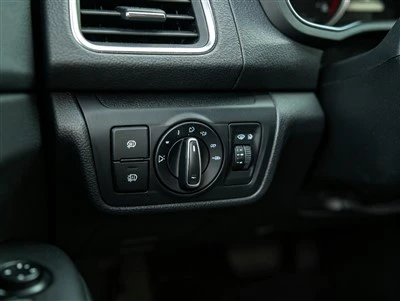
Custom silicone button keypad on an instrument panel, built around a selected Shore A hardness grade.
Material thickness changes the measured reading too. A thin section reads softer than a thick section of the same silicone, because the indenter sinks further into a thinner wall. This is why we agree the gauge point and part thickness with buyers before approving a hardness number, rather than copying a figure from a reference datasheet that describes a different geometry.
Five hardness bands compared: Shore A 30 to 70
The table below lays out the hardness grades Shanyo most often supplies, from softest to firmest. Values are typical; exact rebound, wear and feel depend on wall thickness, plating and the internal rib design. Ask our engineering team for a sample set across bands before locking a specification.
| Hardness band | Feel and rebound | Wear and durability | Best-fit applications | Strengths | Limitations |
|---|---|---|---|---|---|
| Shore A 30–39 (soft) | Plush, cushioned, slow rebound; compresses under light touch | Lower abrasion resistance; more prone to permanent set under repeated deep press | Grip seals, protective covers, soft-touch panels, low-damage touch pads that are not actuated often | Comfortable against skin, quiet, gentle on contacts | Sticky on high-cycle keys; poor snap return; deforms under sustained pressure |
| Shore A 40–44 (medium-soft) | Soft but controlled; moderate rebound, mild cushion | Balanced wear; acceptable cycle life for moderate duty | Consumer remote controls, handheld remotes, soft-touch consumer keypads with light finger use | Pleasant feel, good noise damping, easy to mold legends | Softer bands drift toward stickiness on the most-used keys |
| Shore A 45–54 (medium) | Crisp balanced feel; clear rebound, moderate travel | Good abrasion and compression-resistance; longest general-purpose cycle life | Most keypads, instrument panels, medical handhelds, general industrial buttons | Versatile, reliable snap back, less wear over time, works with most dome forces | Not plush enough for soft luxury grip; not firm enough for harsh glove panels |
| Shore A 55–64 (medium-firm) | Firm, snappy; little cushion, fast rebound, distinct click | Higher wear resistance; holds shape under repeated firm press and grease or dust | Industrial control panels, machinery stations, outdoor keypads, glove-operated buttons | Resists accidental light press, durable in dust/oil, stable under temperature swing | Feels stiff on bare fingers; less comfortable for long handheld use |
| Shore A 65–70 (firm) | Rigid, firm; minimal give, hard tactile edge | Maximum abrasion and shape retention; suited to high-wear surfaces | Heavy-duty push pads, membrane-sealed industrial panels, vibration-exposed controls | Strong structure, resists deformation, survives rough handling and abrasion | Can feel hard and toy-like; poor comfort for handheld consumer devices |
Scenario framework: which band for which product
Consumer electronics and remote controls - Shore A 40–50. TV remotes, smart speaker keypads, small handheld scanners and home-app controls are pressed by bare fingers, often hundreds of times a day. A medium-soft to medium band keeps the grip pleasant while still snapping back cleanly over the internal metal dome. Shore A 35 in this role caused the sticking problem described at the opening; Shore A 50 fixed it without losing the soft surface buyers wanted.
Medical devices and handheld diagnostics - Shore A 45–55. Patient monitors, infusion pumps, glucose meters and handheld diagnostic tools balance gentle cleaning, glove contact and reliable feedback. The medium band handles light exam gloves, disinfectant wiping and repeated clinical use, while holding legends and colors stable under ISO 13485 cleanroom production. Medical-grade platinum-cured silicone, rather than peroxide-cured, is specified for biocompatibility on devices contacting skin or patients.
Industrial machinery and plant panels - Shore A 55–64. Control panels on lathes, conveyors, packaging machines and welding stations are operated through work gloves, in dusty or oily air, often under vibration. A medium-firm band resists accidental light touches, rebounds fast through glove thickness, and holds its shape against abrasion and contaminant buildup. These panels usually pair the firmer silicone with a heavy-duty dome sheet array rated for the higher glove force.
Outdoor and public access terminals - Shore A 55–65. Parking pay stations, gate keypads and outdoor HMI panels face wet fingers, work gloves, sun and wide temperature swings. A firm band stands up to weather, grime and rough public handling, and pairs with sealed membrane switch construction for splash and dust resistance.
Wearable and soft-touch grip covers - Shore A 30–40, only where cycling is low. Protective sleeves, grip pads and cushion panels that are not pressed as actuators use the soft band for comfort. Buyers should keep this soft grade off high-cycle push buttons, where rebound speed and shape retention matter.

Stainless steel domes mounted beneath silicone buttons; silicone hardness and dome force must be matched as a combined stack.
Checklist: parameters to agree before ordering silicone buttons
When a buyer sends a request for quotation, our engineering team confirms more than a single hardness number. The checklist below keeps the specification complete and avoids a soft or firm grade being misapplied to the wrong stack-up.
1. Target Shore A hardness and tolerance. State the nominal hardness, for example Shore A 50, with a tolerance such as ±5. Record the gauge method and dwell time so both sides measure the same part the same way.
2. Wall thickness and rib design. Wall thickness controls how much the button compresses and how the hardness translates to feel. Thin walls read softer; thick walls read firmer. Internal ribs guide travel and prevent neighboring keys from coupling, which matters most on the soft bands.
3. Actuation force and dome match. Pair the silicone band with the metal dome actuation force. A soft silicone over a heavy dome can absorb travel before the dome collapses, producing a dead feel. A firm silicone over a light dome can make the button stiff without enough cushion. We review the combined force curve on custom panels.
4. Silicone grade and curing system. Choose medical-grade platinum-cured silicone for skin-contact and patient-contact devices; industrial and consumer grades use the appropriate food or general-purpose compound. The curing system affects residual byproducts, clarity and biocompatibility claims.
5. Rebound and cycle requirement. State how many actuations the button must survive, and whether rebound must be near-instant for fast repeated press. Softer bands lose rebound speed first under high cycling; firmer bands return faster but feel stiffer.
6. Environment and contact chemistry. Note oil, grease, dust, disinfectant, sweat, UV exposure and temperature range. These influence hardness retention, color stability and the need for a sealed membrane construction rather than an exposed silicone key.
7. Legend and finish. Decide whether legends are molded, silk-screened or pad-printed, and whether the finish is matte, glossy or soft-touch. Finish chemistry can alter perceived hardness slightly, and print durability varies by grade.
Common selection mistakes
The first mistake is choosing hardness for showroom feel without testing under duty cycle. A soft remote feels premium in hand but fails under daily repeated press, exactly as the opening case shows. Always sample the selected grade on a working prototype and run the intended number of cycles before committing to production.
The second mistake is treating hardness as a substitute for force tuning. Buyers sometimes ask for a softer button and expect lower actuation force, when force should be adjusted through dome selection and wall geometry. Changing hardness alone shifts feel, rebound and wear without a controlled change in the peak press force.
The third mistake is mixing hardness assumptions across the whole keypad. A panel can use a medium grade for most keys and a firmer grade for a few heavy-duty function keys, rather than forcing one hardness to fit every button. Discuss which keys face the hardest use before fixing a single value.
The fourth mistake is ignoring permanent set. Soft silicone left depressed for long periods can stay deformed. If a button is held down for minutes at a time, or stacked under weight in packaging, choose a firmer band that keeps its shape after load release.
How we verify hardness and durability before shipment
Each production lot is sampled for Shore A hardness with a calibrated durometer, typically five pieces, measured at a defined flat point on the button. The lot passes when readings stay within the agreed tolerance of the target. Contact resistance and actuation force are checked against the dome assembly, and high-volume programs run cycle testing to the agreed life target, checking rebound, force drift and permanent set at intervals across the test.
For medical and automotive programs we supply inspection records and, where required, PPAP documentation aligned to IATF 16949 process controls. Buyers evaluating multiple silicone button suppliers can request a sample kit spanning Shore A 40, 50, 60 and 70, so the difference in feel can be compared directly in their own hands before a purchase decision.
Clear conclusion: what to choose in each situation
Choose Shore A 30–39 when the part is a soft cushion or protective cover pressed rarely, not a high-cycle actuator. Choose Shore A 40–44 for soft consumer remotes and light-touch handhelds where comfort matters more than a sharp click. Choose Shore A 45–54 for the broad middle ground of keypads, medical handhelds and general instrument panels, where balanced feel and long life matter most. Choose Shore A 55–64 for industrial, outdoor and glove-operated panels that need a firm, fast-reacting button in harsh conditions. Choose Shore A 65–70 only for heavy-duty, high-wear push pads where rigidity outranks comfort.
Shanyo manufactures custom silicone buttons and keypads, paired with dome sheet arrays, FPC flexible circuits and complete membrane switch assemblies. For a custom OEM or wholesale program, send your panel drawing, target actuation force and operating environment, and our engineering team will recommend the hardness band, sample it in 48 hours for standard geometries, and confirm the full stack-up before production. Contact Shanyo for a hardness sample kit and factory pricing.
- John Smith, Senior Application Engineer, Shanyo Precision Electronics, Qingdao